
Xero Plans & Pricing Are Changing

May 1, 2024

Xero is chaning is product lineup and pricing in Australia from 1 July 2024.

What's Changing?


Xero is launching three new streamlined business plans (Xero Ignite, Xero Grow and Xero Comprehensive), and enhancing the Ultimate plan in Australia. The new plans will replace Xero’s Payroll Cashbook, GST Cashbook, Payroll Only, Starter, Standard and Premium plans which will no longer be sold from 1 July 2024.


The company says that this will mean easier access to tools (including cash coding in all of the new business plans), more bundled features, and fewer plans and add-ons to navigate.


Existing add-ons will no longer be available for separate purchase from this date. Any new subscriptions from 1 July 2024 can only be added to a new plan. Enhancements to Ultimate plans will also begin from this date, which include Xero Expenses and Xero Projects for 10, instead of the current 5.
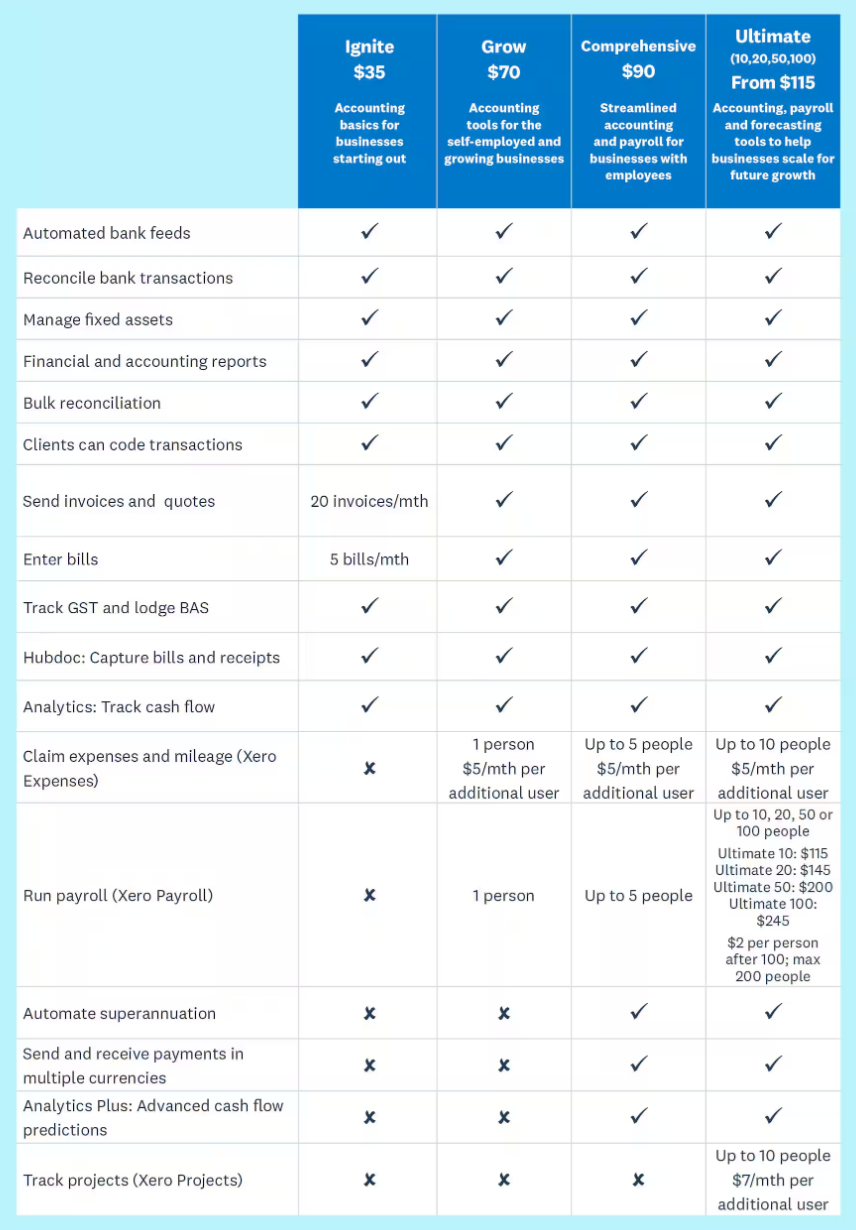


Where we hold the subscription for Xero on your behalf, we will automatically apply the new pricing once your plan is converted.


Clients who pay us via Agreed Price Service Plan will continue to receive 10% discount on new plans.


When Will Your Plan Change?


From 1 July 2024:


  • Xero will begin moving subscribers to the new plans in phases, taking into account the subscriber’s current plan (and any add-ons).
  • This move will start with Premium 10–100 plans which will convert to the equivalent tier Ultimate plan at the new Ultimate pricing on 1 July 2024
  • Xero says that they intend to move subscribers to new plans by March 2025
  • Alternatively, you can choose to move to new plans before this automatic conversiontakes place if you wish
  • If you want to upgrade, downgrade, remove an add-on from your plan, or transfer a subscription after 1 July 2024, one of Xero's new plans will need to be chosen
  • Once you have moved to a new plan, the previous plan will no longer be available


If you have questions about the new Xero plans or the conversion process, please contact us.

Counting Down to EOFY
April 11, 2026
The end of the financial year is fast approaching on 30 June. To get the best tax outcome for your business, you should look at a few things now.
5 ways logistics companies can cope with rising fuel prices
April 11, 2026
With fuel prices rising fast, it’s important for your logistics business to think about the impact of these skyrocketing prices on fuel costs and profit margins.
Taking steps to stay compliant with ATO rules
April 11, 2026
The ATO is cracking down on compliance. Here are five ways your small business can remain compliant and stay in the ATO’s good books.
How going green can be good for business
April 11, 2026
While there’s no easy solution to fix climate change, there are still plenty of ways that businesses can help the environment.
From 1 July 2026 Payday Super will be mandatory.
April 11, 2026
Payday Super will be mandatory. Instead of quarterly payments to employees’ funds, contributions will need to be paid at almost the same time as salary and wages.
Being in control of your cashflow has never been more important. We’ll help you set up detailed cash
April 11, 2026
Being in control of your cashflow has never been more important. We’ll help you set up detailed cashflow forecasting to put you back in the cashflow driving seat.
Reflecting on where you are at and thinking about your business goals for the financial year?
April 11, 2026
If you are reflecting on where you are at and thinking about your business goals for the financial year ahead, we can help you establish measurable goals for your business.
5 things your balance sheet can tell you about your finances
February 25, 2026
Your balance sheet is a key financial statement to understand. So we’ve highlighted five ways your balance sheet can keep you informed about your financial health.
Interest rates go up: how could this affect your finances?
February 25, 2026
The Reserve Bank of Australia has increased interest rates from 3.6% up to 3.85%. What does this rise mean for you, your business and your financial opportunities?
February 25, 2026
What Employers Need to Know Before 1 July 2026